The only constant is change
Navigating Constant Change Without Losing Your People
Companies are rarely dealing with just one change at a time these days. M&A, reorganizations, cost pressure, AI-driven redesign of work, and leadership turnover now stack on top of each other, creating a constant sense of instability for employees. The risk isn’t only operational; when communication doesn’t keep up with the pace of change, you see rumor mills, talent loss, and declining trust in leadership.
Why change feels different now
Change is overlapping, not linear; employees experience it as continuous noise rather than an event with a clear beginning and an end date.
Hybrid and distributed work make clarity [in all things] almost impossible, so confusion lingers longer and spreads faster.
Quarterly town halls, big all-hands meetings, and one-time FAQs no longer meet the call to share information with teams.
Leaders who once relied on a single big announcement now need a communication rhythm that feels more like a drumbeat: steady, predictable, and responsive.
A [simple?] blueprint for communicating change
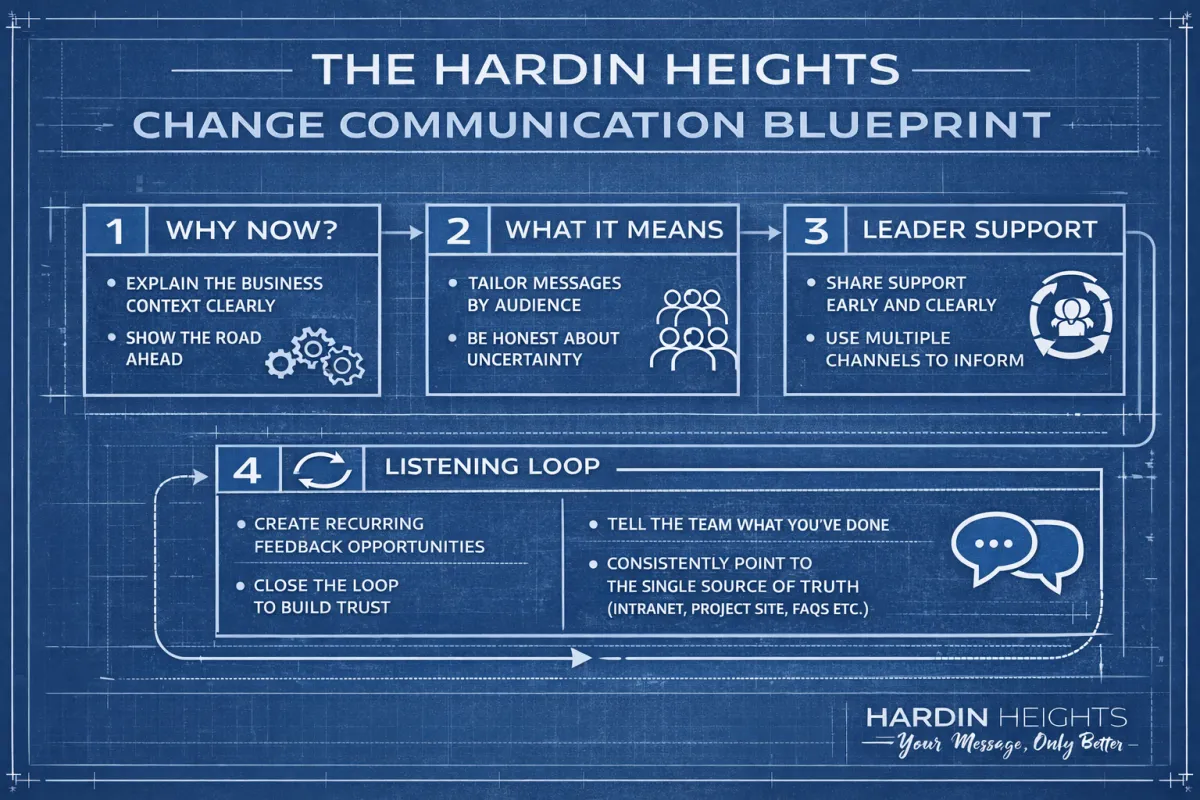
You can frame a change-communications approach around four questions employees are already asking, even if it’s just in their heads.
Why is this happening [now]?
Start with a clear, jargon-free explanation of the business context and the decision.
Connect the change to a future state that feels true. Think about a plan that shares what the next 12–18 months look like for the team.
What does this mean for me?
Segment messages by audience (factory/plant/frontline vs. leaders vs. office/corporate) so each group gets specific, relevant details.
Acknowledge uncertainty honestly instead of overpromising; employees trust straight talk more than vague reassurance.
How will [leaders] support me through this?
Share resources early: timelines, training, where to ask questions, new processes, mental/physical health support, feedback channels.
Make it easy to ask questions and get answers quickly using champions (leaders in the know), regular updates, intranet/project sites, meetings, emails and even surveys.
Are you still listening?
Move from one-time feedback checks to recurring opportunities to ask and receive input, so you can spot hot issues and adjust.
Close the loop and share the changes. We heard you say X; here’s what we’re doing about it. This is where trust is built.
Where leaders get stuck
In most organizations, the biggest gaps aren’t intentional; the gaps come due to capacity and structure failures. Leaders are busy running the change itself, managers are overloaded, and communications teams are stretched across competing priorities. Messages become inconsistent, timelines slip, and the story of change gets fragmented based on who is better at updating their teams.
This is exactly where an experienced communication partner can help: by telling the story in the same way, with adjustments for different audiences, and using a regular, practical comms plan, AND equipping managers with information, resources and details that guide consistent conversations. A consultant who has lived through multiple M&As, restructurings, and culture shifts can see patterns quickly and help you move faster, with less noise and fewer missteps.
If you’re heading into a major change, or you’re already in it and sense your story is fraying, bringing in outside support for even a short, focused engagement can prevent confusion, turnover, and resistance that are far more costly in the long run.